





Kudo is likely one of the modern Japanese martial arts that best illustrates the encounter between martial tradition, combat realism, and practitioner safety. At first glance, its equipment may seem unusual: a blue or white judogi, a helmet with a transparent visor, small gloves that allow for grabbing, and a protective cup. Yet, each of these elements responds directly to the philosophy and specific rules of Kudo.
To understand why this equipment is necessary, one must first look back at the origins of the discipline and the reflections of its founder, Azuma Takashi.
Origins in Kyokushin Karate
Azuma Takashi was initially a high-level practitioner of Kyokushin Karate, under the direction of Masutatsu Oyama. He notably distinguished himself by winning the 9th All Japan Kyokushin Championship in 1977.
With the experience of competition and training, however, Azuma came to question certain limitations of the rules of competitive karate. Among these were the prohibition against striking the head directly with fists and the absence of any real work on throws and ground fighting.
His questioning was fundamental: how can one maintain the intensity and realism of combat while allowing practitioners to train regularly with an acceptable level of safety?
In 1981, he left Kyokushin and founded the Karatedo Daido Juku in Sendai. His goal then was to develop a more complete method combining martial effectiveness with safety. As early as June 1981, an initial tournament allowed for facial strikes. In 1982, the Hokutoki tournament appeared, which would become closely associated with the development of the discipline.
As the method evolved, it gradually moved beyond the traditional framework of karate. During the first World Championship in 2001, Azuma finally chose the name Kudo (空道). According to the Kudo International Federation (KIF), he believed at that time that his art had evolved enough to no longer simply be presented as another form of karate.
Today, Kudo is defined by the KIF as a complete Japanese budo, intended for self-defense, education, physical and mental development, and sports practice.
Rules that explain the equipment
Kudo equipment makes complete sense when you look at what happens during a fight.
Practitioners may use full-contact punches and kicks, but also throws and various submission techniques. A fight can notably be won by Ippon following a decisive strike or an effective submission. The rules also allow for the awarding of Waza-ari, Yuko, and Koka.
We are therefore looking at a discipline that borrows technical dimensions from karate, judo, jujutsu, and modern combat sports, while maintaining the identity of a Japanese budo.
This technical freedom, however, requires adapted equipment.
The practitioner must be able to strike, but also to grab the clothing, enter into close-quarters combat, throw their opponent, and continue certain actions on the ground. A massive boxing glove would therefore be ill-suited. Conversely, fighting bare-knuckled with direct strikes to the face would make regular practice difficult.
The gear thus constitutes an important part of the compromise sought by Azuma: increasing technical realism while controlling the risks inherent to combat as much as possible.
Download all KUDO INTERNATIONAL FEDERATION (KIF) international rules
The judogi or kudogi: white or blue
The outfit is the first piece of equipment to acquire.
In Kudo, a kudogi is used, the design of which naturally recalls the judogi. This choice is perfectly logical: unlike many forms of karate where grabbing is limited, the clothing here must withstand close-quarters work and throws.
International regulations provide for two colors: white and blue. During an official fight, the color worn allows for the quick distinction between the two combatants. KIF rules also specify certain characteristics regarding the length and width of the sleeves and pants to allow for safe and proper grabbing.
For a beginner training in a dojo where the official kudogi is not immediately required, a sturdy judogi can be an excellent training outfit, depending on the instructor’s requirements.
Suggested product: Judogi / Jiu-Jitsu gi
Be careful, however, if your goal is to participate in an official Kudo International Federation competition: the KIF requires its official equipment in the relevant categories. During the 2025 Asian Championship, for example, adults were required to have both official colors, white and blue.
The Kudo helmet: the iconic piece of equipment
If there is one piece of equipment immediately associated with Kudo, it is certainly its helmet with a transparent facial protector.
This protection is directly linked to one of the major motivations that led Azuma to develop his system: allowing facial strikes in a much freer combat context.
The current official helmet is designated by the KIF as the Neo Headgear KU.
The visor directly protects the face against some impacts and, in particular, prevents every punch from hitting the nose, lips, or brow ridges directly. It thus allows for the integration of facial attacks into training and competition.
However, one must avoid a false impression: wearing a helmet does not make impacts harmless. The head continues to undergo acceleration during strikes. Control, pedagogical progression, and respect for partners therefore remain essential.
For training, the helmet nevertheless allows one to work with a particularly interesting tactical reality: when a punch can truly reach the face, distance, stance, movement, and close-quarters entries take on a whole new meaning.
Suggested product: Deluxe Koshiki / Kudo Helmet
Kudo gloves
The second characteristic element is the Kudo glove, or Kudo Fist Guard in the official nomenclature.
It is much more compact than a traditional boxing glove.
Why?
Because the combatant must retain their ability to grab.
In Kudo, the hands are used to strike, but also to control the opponent, grab their dogi, work in the clinch, prepare a throw, or participate in ground fighting. A glove that is too bulky would eliminate a large part of this technical dimension.
The glove therefore also constitutes a compromise between protection and functionality.
For a beginner, this is a particularly interesting aspect of Kudo. One quickly learns that the different combat distances are not independent: a punch can set up a grab, the grab can lead to a throw, and the throw can lead to control or submission.
It is this continuity between phases of combat that makes up a large part of the richness of the discipline.
For KIF competition, however, ensure you use the approved Kudo Fist Guard requested by the organization. Official rules notably prohibit modifications to approved equipment.
Suggested product: KUDO padded combat gloves - KIF certified
The protective cup: small piece, great importance
The protective cup, often worn with a jockstrap, is a much less visible piece, but an absolutely essential one.
The official men's regulations actually require the wearing of a protective cup under the pants.
In a discipline that includes kicks, knee strikes, close-quarters combat, and throws, appropriate genital protection is indispensable.
The choice should be made according to three main criteria: protection, stability, and comfort.
A cup that is constantly shifting becomes a nuisance and can even provide poor protection when it is needed. It is therefore important to choose the right size and verify that it remains properly positioned during movement, kicking, and ground work.
An interesting fact for international competitors: recent KIF documents indicate that the men's cup, just like the mouthguard, can be a different brand than official Kudo equipment.
Suggested product: Athletic support and cup ("Jockstrap")
Other protections according to the practitioner and category
The helmet, gloves, and cup constitute the most characteristic basic equipment, but they do not necessarily represent all the gear.
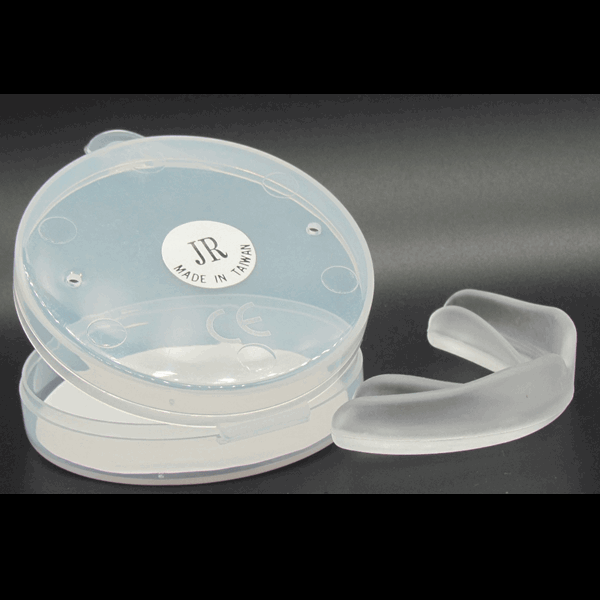
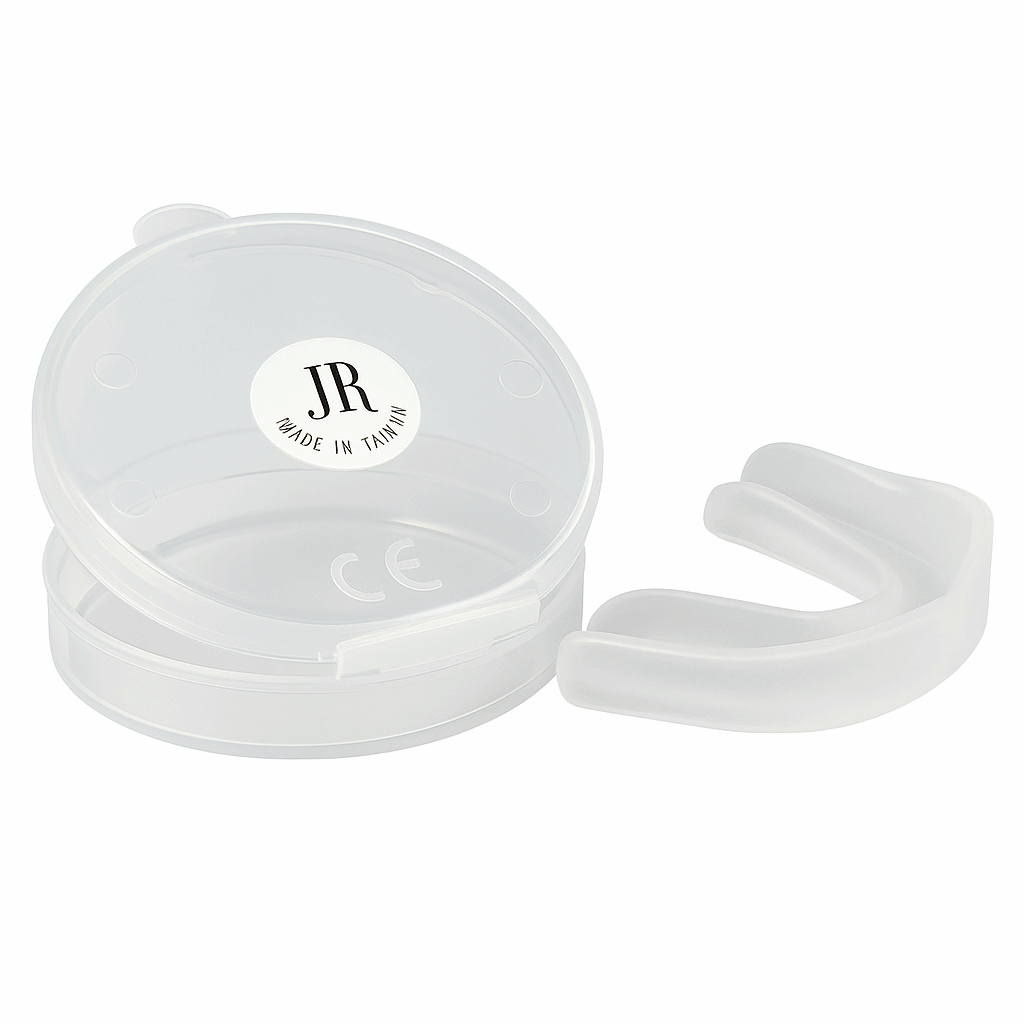
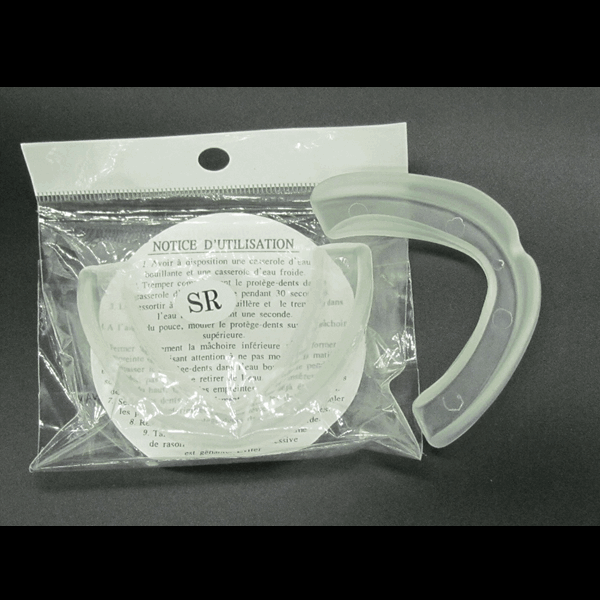
Depending on age, gender, and competition category, the KIF provides for shin guards, arm guards, and chest protectors. A mouthguard is also required by the competition rules.
Requirements are not exactly the same for an adult, a junior, or a female practitioner. The rules are precisely adapted to take different categories into account and to strengthen safety.
Before a competition, it is therefore always best to consult the regulations applicable to the event and to validate your equipment with your instructor.
Suggested product: Protection
Equipping yourself well to practice better
Kudo gear ultimately tells a part of the story of this martial art.
Azuma Takashi was not simply looking to invent a new competition. His questioning focused on how to develop a more complete budo, allowing techniques to be tested against real opposition while establishing rules and protections that allow practitioners to continue learning.
The judogi or kudogi allows for grabs and throws. The helmet allows for the integration of facial strikes. Small gloves protect the hands while retaining the ability to grab. The cup and other protections reduce certain risks associated with full contact.
Equipment is therefore not secondary to Kudo: it participates directly in its method.
Whether you are starting Kudo or simply wish to complete your martial arts equipment, you can discover our selection of judogis, gloves, protections, and training accessories at e-TAO.ca — a Canadian boutique specializing in martial arts.
--
About the author
Larry Foisy has been teaching martial arts for over 30 years. He is a 6th dan Shihan/Renshi in Shorinjiryu Karatedo and is also recognized as a Shihan by the Dai Nippon Butoku Kai in Kyoto, Japan. A physiotherapist by training and holder of a master's degree in computer science, he combines scientific knowledge with a traditional martial practice.
Founder and director of the Larry Foisy Martial Arts Center as well as the specialized boutique e-TAO.ca, he teaches Karatedo, Iaido (Muso Jikiden Eishin-ryu, 3rd dan), and Iaijutsu (2nd dan KNBK), Koshiki — of which he is a former world champion, international referee, and organizer of the Canadian Open Championship —, Kudo, Kyusho-jitsu (2nd dan), Goshin-jutsu (self-defense), and Bukki-ho (traditional Okinawan weapons) daily.
His background also includes judo (1st kyu), Muay Thai, and aikido. He also practices Brazilian Jiu-Jitsu and Tai Chi Chuan. Driven by a deep passion for budo, he has chosen to dedicate his life to the study, practice, and transmission of traditional martial arts.
Through his columns, Larry Foisy wishes to share not only technical, historical, and philosophical knowledge, but also the values of respect, rigor, perseverance, and personal development that constitute the true heritage of martial arts.