





When one begins the practice of Iaido or Iaijutsu, a question quickly arises: what equipment should I buy, and in what order?
It is easy to believe that one must immediately invest in a beautiful Japanese sword. However, this is generally not what I recommend to my students. As in many traditional martial arts, equipment should evolve with the practitioner, their experience, and their needs.
One can very well begin with a few simple and relatively affordable accessories, then gradually improve their gear. This approach not only allows you to spread out the expenses, but more importantly, to acquire the technical foundations before moving on to more specialized equipment.
Here is the progression that I generally recommend.
1. Starting simple: the bokken or bokutō
The first purchase I recommend is a wooden training sword, called a bokken or bokutō.
It is probably one of the best investments to start with. It allows you to learn the fundamental movements of the Japanese sword without having to invest immediately in an iaito.
With a bokken, one can notably work on sword grip, footwork, posture, cutting trajectories, tip control, body coordination, as well as a large part of the fundamental movements taught at the dojo.
It is also an excellent tool for training at home.
A little tip from a Sensei who had to teach virtually during the pandemic: when you practice indoors and your ceiling is not very high, work on your knees!
This simple change allows you to gain considerable height and can save you from hitting the ceiling, a light fixture... or leaving a nice mark on a wall. I speak here with the experience of several hours of virtual teaching!
Obviously, even with a wooden sword, you must always ensure that you have a safe space around you. A bokken remains a rigid training weapon that can cause significant injuries or damage.
To start, a simple model in red or white oak is perfectly suitable.
Suggested product: Wooden training sword – Bokken / Bokutō 40″ – Red or white oak
2. The obi: learning to properly carry your sword
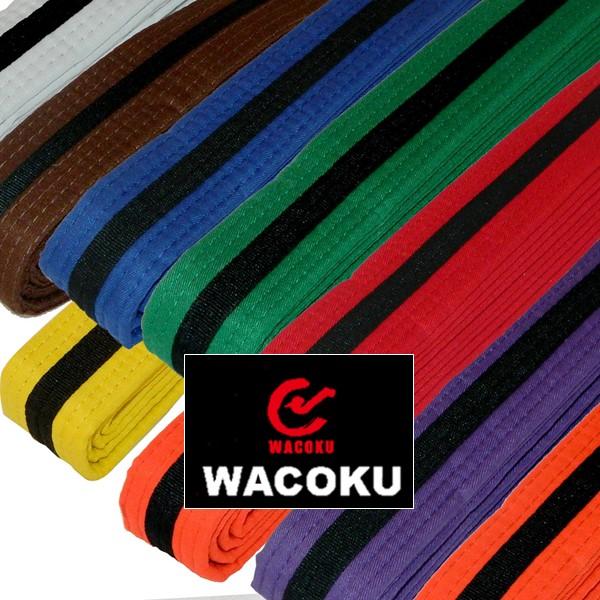
The second purchase I recommend is an obi adapted for the practice of Iaido.
The obi is much more than a simple decorative belt. Its width and thickness allow for the proper holding of the sword and for creating the various layers into which the saya will be inserted.
The positioning of the sword directly influences several technical aspects: drawing, control of the saya, the angle of the sword, nōtō, and even certain movements.
One then begins to understand that the sword is not simply held in the hands: it is part of the posture and the overall organization of the body.
A proper obi therefore allows for the development of good habits even before the purchase of an actual iaito.
See our obi for Iaido: Collection of obi for Iaido
3. Adding a plastic saya
Once the first movements have been mastered with the bokken, I generally recommend adding a plastic saya adapted to the training sword.
This is a particularly interesting step, because it allows you to get closer to the work performed with an iaito.
One can then start practicing nukitsuke more seriously, that is, the action of drawing the blade while simultaneously executing an initial offensive or controlling action, as well as nōtō, the return of the blade into the saya.
Work with the saya is fundamental. In many forms of Iaido and Iaijutsu, the left hand does not remain passive. It actively participates in the draw through the work of sayabiki, that is, the movement of pulling back and controlling the saya.
The plastic saya also has a very practical advantage for the beginner: it is relatively durable and replaceable.
When learning to draw and especially to re-sheathe, errors in trajectory are normal. Even after years of practice, it can happen that you make a mistake. I have even damaged a saya myself despite my experience.
It is therefore better to make certain mistakes with an affordable training saya than with the much more expensive saya of an iaito.
Suggested product: Plastic saya for wooden training sword (Bokken)
4. The hakama: much more than a question of appearance
Next comes the hakama.
For the practice of Iaido, I ideally recommend a hakama specifically designed for this discipline. An Aikido hakama can also be suitable for starting out, but certain details distinguish the models intended for Iaido.
The koshi-ita, the more rigid part located at the back of the hakama, contributes notably to its drape and the maintenance of the whole garment.
A good hakama must also allow for fluid movement and retain its pleats correctly. The latter are not just aesthetic: they are part of the traditional structure of the garment.
One detail that I recommend checking before purchasing specifically concerns pleat maintenance.
Quality hakama, such as certain models from the Japanese company Tozando, have internal ties that help better maintain the pleats during washing and drying. This may seem secondary when buying, but after several washes, you will quickly understand the benefit of this feature!
A quality, well-maintained hakama can accompany a practitioner for many years.
Suggested product: Tetron Hakama – Iaido/Kyudo – Tozando
5. The major investment: choosing your first iaito
After a certain period of practice comes the moment that many wait for with impatience: the purchase of the iaito.
This is where I recommend being particularly careful.
An iaito is not simply a decorative object that looks like a katana. It is a true training tool that will be drawn and re-sheathed hundreds, then thousands of times.
For serious and regular practice, I therefore advise against decorative swords or cheap reproductions whose manufacturing or structural integrity is unknown. The plastic sword bought in a souvenir shop might be fun, but it does not constitute a real tool for serious Iaido or Iaijutsu practice.
Personally, I prefer a quality iaito from Japan designed specifically for sword art practice.
The balance, length, weight, construction of the tsuka, the fit of the saya, and the general quality of assembly directly influence the practice and, above all, safety.
An interesting detail to observe is the construction of the tsuka, the handle. Beneath the wrapping (tsuka-ito), one traditionally finds samegawa, or ray skin. It is sometimes called "shark skin," but it is indeed ray skin. Its rough surface helps stabilize the wrapping.
Above all, there is one element that every practitioner should learn to check regularly: the mekugi.
The mekugi is the peg that helps keep the handle assembled to the tang of the blade. Make a habit of checking its condition and ensuring it is correctly positioned. With a training weapon that is handled at high speed, safety should never be taken for granted.
Example of a Japanese iaito: Iaito – Toryumon Koshirae Japanese training sword
Before purchasing, I also recommend consulting your instructor. The length of the blade, the length of the tsuka, and the weight of the iaito must be adapted to the practitioner, but also to the particularities of the school in which they study.
The most beautiful sword is not necessarily the best sword for you.
6. Protecting your investment with a case
When you invest a significant amount of money in an iaito, it makes sense to protect it properly.
A sword carrying case protects the saya, the tsuka, and the various components against bumps and scratches during transport.
It also responds to a much more practical consideration: you obviously do not want to walk down the street or enter a business with something that looks like a katana directly in your hand!
A case allows for much more discreet and appropriate transport between home, the dojo, workshops, and seminars. Some models also allow for the transport of multiple swords, which becomes useful when you eventually own a bokken, an iaito, and other training weapons.
See our sword cases: Sword cases
7. Don’t forget maintenance
Buying the sword is only the beginning. You must also learn to take care of your equipment.
I therefore recommend having a maintenance set adapted to the Japanese sword.
Even if a modern iaito does not require the exact same maintenance as a traditional carbon steel blade, it is important to regularly clean your equipment and inspect the blade, tsuka, mekugi, tsuba, and saya.
This regular inspection is, moreover, an excellent martial habit.
Taking care of your sword is part of the practice.
Suggested product: Sword maintenance set – Iaito / Katana
8. And eventually… the shinken
For some practitioners, the path eventually leads to the shinken, a real sword equipped with a sharp blade.
At this level, we are changing categories entirely.
The shinken can notably be used in some schools for the practice of cutting, generally called tameshigiri, or in certain contexts suemonogiri, depending on the tradition and the nature of the work performed. Notably, targets made of rolled mats prepared for cutting are used.
This practice must, however, be performed under the supervision of a competent instructor. A sharp blade obviously does not forgive the same mistakes as a bokken or an iaito.
In the context of a dojo where a sword is intended for learning how to cut or to be used by several practitioners, it is not always wise to invest immediately in an extremely expensive piece.
A sword intended for learning is at risk of suffering from poor trajectories, twists, or impacts. You should therefore look above all for a safe, functional tool adapted to the intended use, rather than a prestigious or collector's piece.
For a personal shinken intended to accompany an experienced practitioner for several years, the criteria obviously become different, and the investment can then be more significant.
Building your equipment at the same pace as your practice
It is therefore not necessary to buy all your equipment from the very first Iaido or Iaijutsu class.
I prefer to see the equipment evolve gradually:
Bokken → Obi → Training Saya → Hakama → Iaito → Case and maintenance → eventually Shinken.
This progression allows you to develop the necessary skills before each new investment and, above all, to better understand what you are truly looking for in your equipment.
After a few months or years of practice, our perception of a good sword changes enormously. We begin to feel elements to which we paid no attention at the beginning: balance, length, weight, hasuji — the correct orientation of the cutting edge —, control of the saya, or even the shape and length of the tsuka.
Equipment must remain at the service of practice, not the other way around.
A magnificent iaito will never replace thousands of repetitions. Conversely, a simple bokken in the hands of a serious practitioner already allows for considerable work.
So start simple, invest gradually in appropriate gear, and when the time comes to choose more specialized equipment, ask your instructor for advice.
It is often they who will be able to spare you the most expensive purchase of all: that of equipment that is magnificent… but which is not suited to your practice.
Happy training!
About the author
Larry Foisy has been teaching martial arts for over 30 years. He is a 6th dan, Renshi/Shihan in Shorinjiryu Karatedo and is also recognized as Shihan by the Dai Nippon Butoku Kai of Kyoto, Japan. A physiotherapist by training and holder of a master's degree in computer science, he combines scientific knowledge with traditional martial practice.
Founder and director of the Centre d’arts martiaux Larry Foisy as well as the specialized store e-TAO.ca, he teaches, among others, Karatedo, Iaido (Muso Jikiden Eishin-ryu, 3rd dan), Iaijutsu (2nd dan KNBK), Koshiki — of which he is a former world champion and international referee —, Kudo, Kyusho-jitsu, Goshin-jutsu, as well as Bukki-ho.
His background also includes judo, Muay Thai, and aikido, in addition to his practice of Brazilian Jiu-Jitsu and Tai Chi Chuan. Through his columns, Larry Foisy wishes to share the technical, historical, and philosophical knowledge that surrounds traditional martial arts, but also the values of respect, rigor, perseverance, and personal development that constitute their true legacy.